10 km open water swim: precision, control and a passion for movement
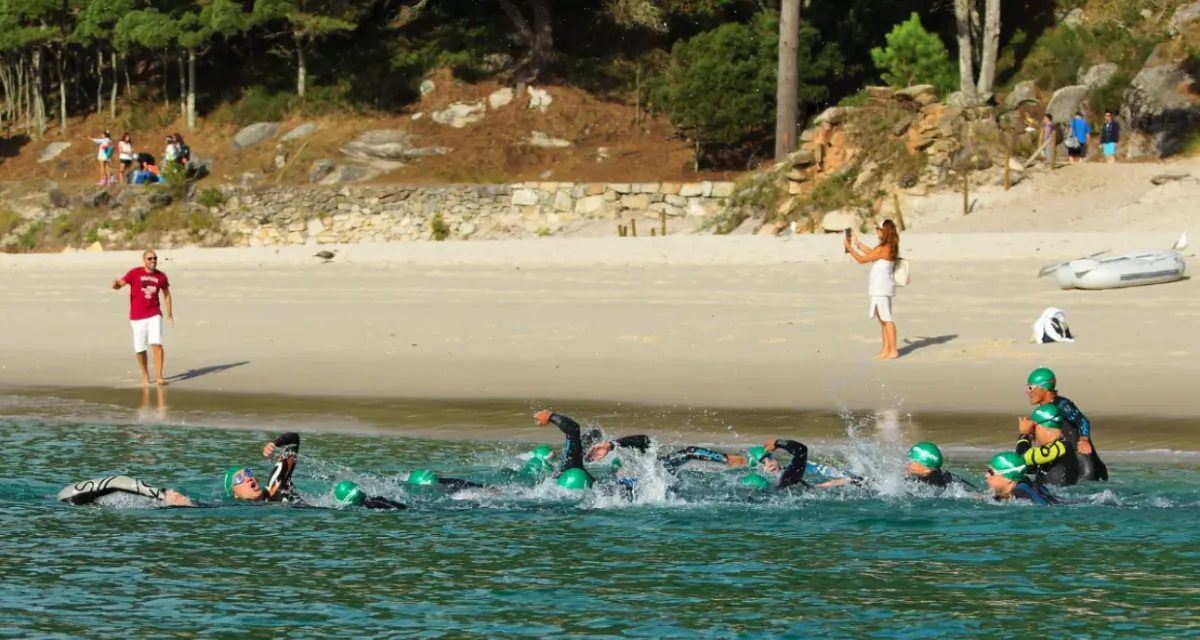
An open water experience that reflects the same values he applies in his medical practice as a shoulder surgery specialist.
Taking on the open water between the Cíes Islands and the coast of Vigo is not an impulsive decision. It’s a demanding test that requires concentration, technique and complete command of the body. Dr. Ricardo Aveledo, a specialist in shoulder diagnosis and surgery, decided to complete this crossing for the same reason that guides his medical work: a commitment to functional movement, biomechanical balance and genuine personal achievement.
More than a swim: a connection to mobility
The Cíes–Vigo crossing is one of Spain’s most iconic open water swimming events, covering 10 kilometres of open sea. Taking it on demands careful planning and precise execution — two qualities that also define Dr. Aveledo’s work in the operating theatre.
As a shoulder specialist, he understands better than most the importance of every stroke, every joint angle and every sustained effort. This experience wasn’t just a physical challenge; it was also an opportunity to observe, from the inside, the fundamental role the shoulders play in a discipline like long-distance swimming.
A test that unites science and real experience
During the crossing, Dr. Aveledo experienced first-hand what many of his patients go through: the desire to move without pain, to maintain functionality, to not give up when fatigue sets in. That practical understanding complements his academic and international training.
This isn’t a sporting feat for its own sake — it’s a coherent example of his medical philosophy: caring for the joints in order to preserve one of the body’s most valuable capacities, the ability to move freely and with control.
Seven thousand strokes with each arm
Ten kilometres in open water works out at some seven thousand strokes with each arm, every one of them overhead. It is the movement that brings distance swimmers to an orthopaedic clinic: the rotator cuff working over and over in exactly the place where it has least room.
More on that condition: rotator cuff tear.
Share